
Main Introduction
Residential Turf in the Northwest Houston Context
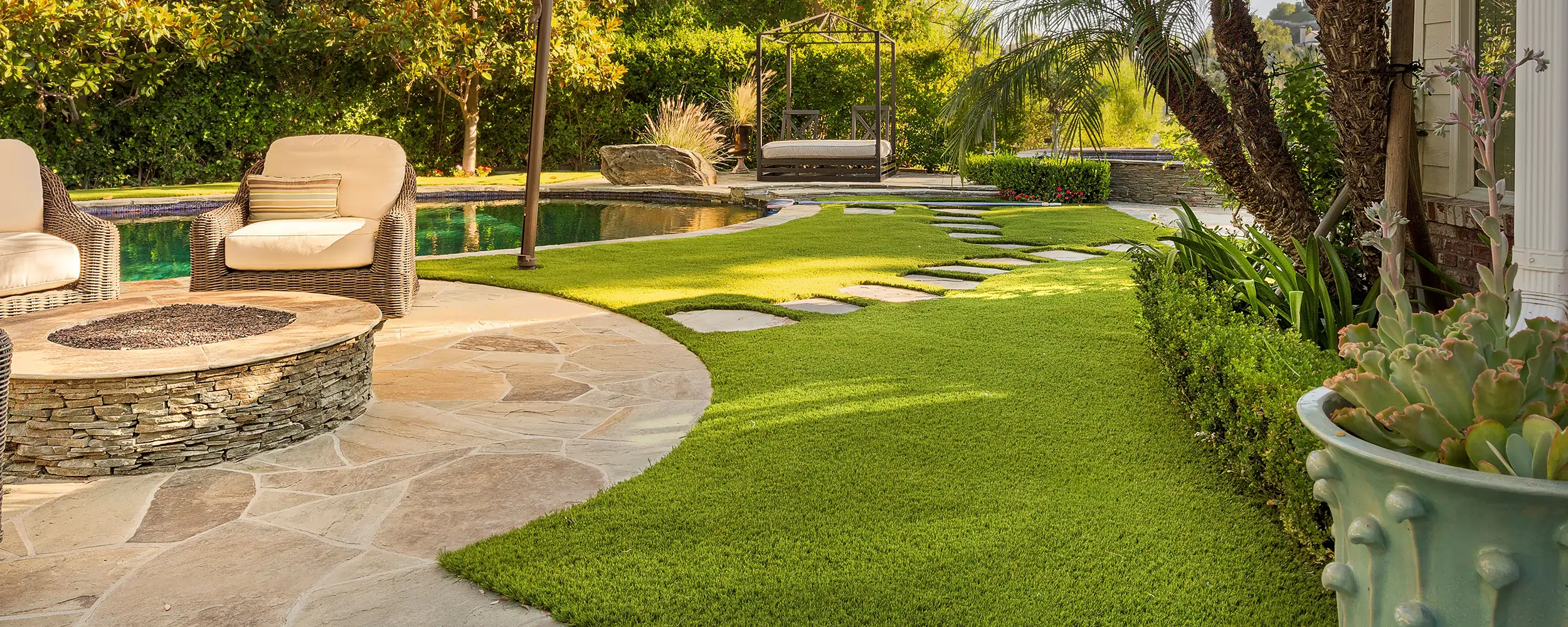
Residential artificial turf installation in Cypress and the surrounding northwest Houston corridor is a practical solution to problems that organic grass cannot solve on its own. Coastal prairie clay holds water in low spots after storm events and bakes into cracked hardpack during July and August. St. Augustine thins out under established tree canopy regardless of irrigation input. Dogs, kids, and outdoor living patterns concentrate wear in specific zones that natural grass cannot recover from between growing seasons. Property owners who reach the point of serious consideration about synthetic turf have usually been managing these conditions for years before they call.
Turf Installation of Cypress serves residential clients across the full geographic range of the northwest Houston market — from conventional subdivision lots in Cypress, Tomball, and Spring to ranch-edge estate lots in the Hockley FM 362 corridor, Waller County acreage, and the equestrian-adjacent neighborhoods of Stable Gate, Sterling Knoll, and Bridgeland north. Each property type presents different site conditions and different project priorities, and each deserves a project plan built around what the specific site requires rather than a standard residential spec applied universally.
The Cypress Residential Market: What Drives Projects
In conventional Cypress subdivision properties — Black Horse Ranch, Lakes of Rosehill, Longwood Ranch, Bridgeland's established phases, the neighborhoods along Cypress Creek and Cypress North Houston Road — the most common project drivers fall into consistent categories. Shaded rear yard zones under established live oaks and pine canopy where no natural grass strain survives longer than one season. Side yards between residences where dog use has created persistent bare-clay mud patches. Front yards on corner lots where irrigation has been fighting clay drainage and has been losing that fight for fifteen years. Large estate backyards where the total maintenance burden of a 10,000 square foot lawn has become a weekly commitment that does not align with how the property is actually used.
For each of these scenarios, the solution path starts with the same discipline: understand the site conditions, plan drainage before placing base material, identify irrigation conflicts before they become post-installation problems, and document scope in writing so everyone has the same expectation about what the finished project delivers.
Ranch-Edge and Equestrian-Adjacent Residential Projects
Residential turf in the Hockley, Waller, and Cypress equestrian sections does not look like a conventional backyard conversion. A residential property in Stable Gate with a paddock and two horses has specific applications near the barn entry and paddock gate that require equestrian-specification thinking even though the project is technically residential. An estate lot on FM 362 with a five-acre footprint has staging and access logistics that suburban projects do not.
For ranch-edge and equestrian-adjacent residential projects, Turf Installation of Cypress builds the same planning steps into residential scope that apply to commercial equestrian applications: equestrian zone boundary review, drain field mapping on well-and-septic properties, access staging review for properties with long setbacks, and material specification that accounts for the actual use conditions in each zone. A paddock gate approach on a residential Hockley estate gets heavier backing specification than the ornamental front-yard strip along the driveway — both are part of the same residential project, but they are different applications.
Well-and-septic residential properties across the Hockley, Waller, Tomball north, and Magnolia rural corridors all receive the same front-of-project drain field mapping protocol applied to any acreage site in the service area. This is not an upsell — it is a standard planning step that prevents the far more expensive problem of discovering a drain field during base excavation.
Base Preparation: The Part That Determines Long-Term Performance
Residential turf installations that fail within two to three years almost always fail at the base, not the turf surface itself. Shallow base work on northwest Houston clay produces a finished surface that develops dips, ridges, and drainage failures as clay expands and contracts through seasonal moisture cycles. Inadequate drainage routing creates standing water under the backing that grows mold, saturates infill, and eventually breaks down the base compaction that was placed at installation.
For residential projects in the northwest Houston clay environment, Turf Installation of Cypress approaches base preparation as the primary determinant of long-term performance. Base depth is set based on clay content and compaction levels measured at the specific site. Drainage routing is mapped before any material goes down. For properties with existing French drain or surface drain infrastructure, turf drainage is integrated with that system rather than ignoring it. For properties with no existing drainage infrastructure, drainage routing from the turf surface to an appropriate exit point is established as part of scope.
Irrigation System Coordination
Established Cypress subdivision lots almost always have irrigation systems with heads distributed through the yard areas where turf is planned. These heads need to be addressed before turf goes down — capped in zones being converted to turf, confirmed as clear of the turf footprint in zones being maintained as irrigated landscaping. Heads that are not addressed before installation are discovered after installation when they activate during the next scheduled cycle and punch through the backing from beneath.
Turf Installation of Cypress reviews irrigation infrastructure during the site visit as a standard step, not an optional extra. Irrigation conflicts are identified and resolved in scope documentation before any material is ordered. For properties where irrigation zones serving non-turf areas run beneath or adjacent to planned turf zones, coordination with the irrigation system is part of scope planning.
Putting Greens, Pet Zones, and Recreation Areas
Residential turf applications in the northwest Houston market include more than lawn conversions. Synthetic putting greens on estate lots throughout the Cypress corridor — from custom homes in the Stable Gate zone to larger lot properties in Katy and the FM 1093 corridor — represent a meaningful segment of residential scope. Pet-focused backyard conversions for multi-dog households are among the most common project types across the entire residential market. Recreation surfaces for kids' play areas, practice courts, and sport-specific training zones appear in the more active-household segments of the residential market.
Each of these application types has its own material specification requirements. Putting greens use low-pile, firm-base turf with compaction standards calibrated for ball roll. Pet zones use backing drainage and infill systems specified for odor management and high-use durability. Recreation areas use turf systems with shock absorption and surface stability matched to the specific sport or activity. Scope documentation for each application type reflects these specification differences explicitly.
Residential Project Delivery
Every residential project begins with a site visit that maps existing conditions and results in written scope before work begins. Installation is sequenced around household access patterns — morning school drop-off routines, dog management requirements during installation, access timing for properties with long driveways. Final walkthrough covers drainage confirmation, care guidance by zone, and high-traffic inspection protocol for the first seasonal cycle.
Residential projects across the northwest Houston corridor — Cypress, Jersey Village, Tomball, Spring, Hockley, Waller, Katy, Brookshire, Pinehurst, Magnolia, Hempstead, Prairie View, and Northwest Houston — are served with consistent planning standards and local routing coordination that provides predictable scheduling.
What Is Included
- Site-specific base depth and drainage specification
- Equestrian-adjacent zone planning on residential acreage
- Pet zone backing and infill selection for multi-dog households
- Putting green contour and compaction standards
- Irrigation infrastructure coordination before installation
- Mature tree root system review on established lots
- Household-schedule-aware installation sequencing
- Written project documentation for homeowner reference
Process Steps
- 1Site visit: drainage behavior, soil, irrigation, root systems, access
- 2Scope documentation: base work, turf specification, edge treatment, sequencing
- 3Well-and-septic drain field mapping if applicable
- 4Irrigation conflict identification and resolution
- 5Base preparation calibrated to clay content and site drainage conditions
- 6Turf placement with cut planning, seam alignment, and edge finishing
- 7Infill placement, grooming, and drainage flow confirmation
- 8Final walkthrough: drainage verification, zone-specific care guidance
Use Cases and Applications
- Backyard lawn conversion for Cypress subdivision and estate lots
- Shaded zone replacement under live oak and pine canopy
- Pet-use side yard and backyard conversions for multi-dog households
- Paddock gate entry and barn approach on residential equestrian estates
- Front-yard low-maintenance conversion on established Cypress corridor lots
- Estate lot large-area coverage in Stable Gate, Sterling Knoll, Black Horse Ranch
- Outdoor living area, patio surround, and entertainment zone turf
- Ranch-edge acreage ornamental yard sections on Hockley and Waller properties
Why Property Owners Choose This Service
- Drainage-first base preparation for northwest Houston coastal prairie clay
- Ranch-edge and equestrian-adjacent residential project experience
- Well-and-septic drain field mapping for Hockley, Waller, and Magnolia acreage
- Irrigation conflict identification and resolution before turf placement
- Application-specific material selection: lawn, pet zone, putting green, recreation
- Established subdivision estate lot planning with root system and hardscape review
- Written scope documentation before any work begins
- Scheduling coordinated around household access patterns and animal management
Pricing Factors
- Project size and access conditions.
- Base preparation and drainage requirements.
- Material specifications selected for expected usage.
- Edge details and transition complexity.
- Scheduling constraints and phased execution needs.
Service Area Coverage
Related Services
Frequently Asked Questions
How do you handle drainage on Cypress residential clay lots?
Base depth and drainage routing are planned based on clay content and existing drainage patterns measured at the specific site. Low-zone ponding areas are identified and drainage exits are confirmed before any base material is placed.
Do you handle residential projects on equestrian-adjacent Cypress properties?
Yes. Residential properties with paddock entries, barn approaches, and horse-adjacent zones get equestrian-specification material in those areas and standard residential specification in ornamental yard zones — each reviewed and documented separately.
How are irrigation systems handled on established Cypress subdivision lots?
Irrigation heads in the planned turf zone are identified during the site visit and addressed in scope before installation begins — capped or adjusted so they do not create post-installation problems when the irrigation system cycles.
Can you install residential turf on Hockley or Waller well-and-septic acreage properties?
Yes. Rural acreage residential properties receive drain field mapping before excavation, access staging review, and zone-by-zone scope documentation as standard planning steps.
What is the difference in base preparation between a residential lawn and a pet zone?
Pet zones receive backing drainage and infill selections optimized for high-use cleaning and odor management. The base preparation is comparable to a standard lawn, but material specification in the turf system differs to account for pet use intensity.
Can a large Cypress estate lot project be phased?
Yes. Large-area estate projects can be phased by zone to align with budget, access windows, or seasonal timing while maintaining consistent finish standards in completed areas.