
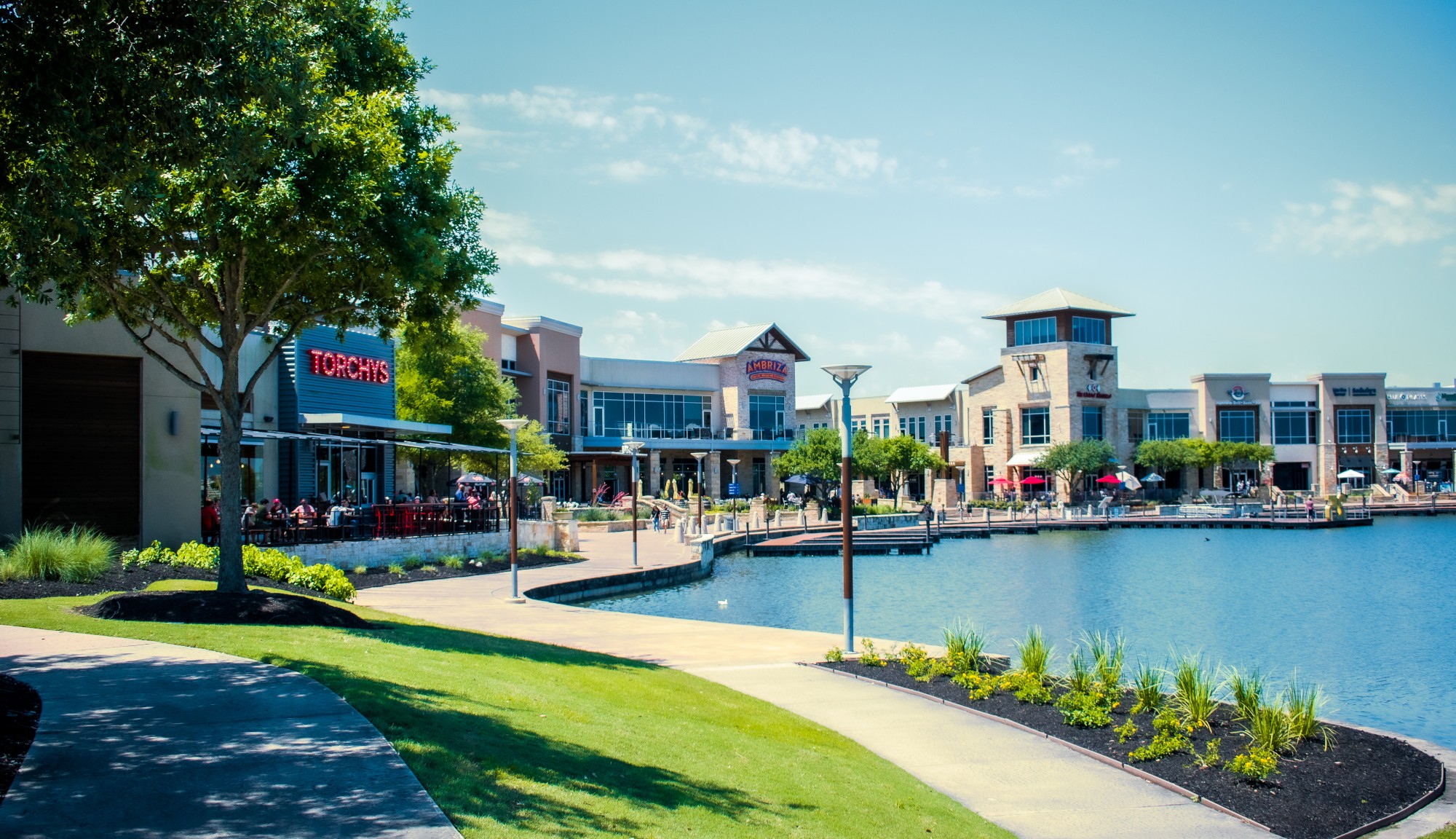
Location Overview
Cypress Ranch Country and the Case for Synthetic Turf
Cypress, Texas sits at the convergence of suburban growth and genuine ranch-edge country. This part of northwest Harris County has pockets that look nothing like the rest of Houston metro — paddock fencing along FM 529, acreage lots carved out of old prairie, and neighborhood sections like Stable Gate where equestrian access is a design feature, not an afterthought. Turf Installation of Cypress serves this entire geographic range, from the Bridgeland north equestrian phases and Lakes of Rosehill to Black Horse Ranch, Longwood Ranch, and the working acreage that backs up toward Hockley.
Artificial turf in this context means something different than a typical suburban yard replacement. Ranch-edge property owners in Cypress are often managing paddock turnout areas, barn-aisle runner sections, round-pen footing approaches, and large usable yards that take a beating from horses, dogs, boots, and the predictable late-summer drought cycle that desiccates St. Augustine past the point of recovery. The question is not whether synthetic turf is appropriate for equestrian-adjacent properties — it is how to install it correctly for the specific conditions each site presents.
What Cypress Properties Deal With
The Cypress area sits on coastal prairie clay that behaves in two frustrating extremes: cracking hard in July and August when rain stops, then holding standing water in low spots after any serious storm event. Acreage lots along FM 529 and the Cypress Top corridor regularly see both problems within the same season. Properties with horses have additional wear from hooves at gate entries, feeding areas, and any path animals travel daily. These zones turn to mud patches in wet periods and bare packed clay in dry ones.
Standard turf installations that ignore subsurface clay behavior will fail faster than expected. Turf Installation of Cypress approaches acreage and equestrian-adjacent projects by starting with how water actually moves across the site. Base preparation is adjusted for clay content and compaction levels already present. Areas with poor slope or natural low points receive additional drainage planning so the finished turf surface does not become a pond during heavy rainfall. For properties where livestock or heavy equipment occasionally crosses the turf edge, transition finishing and anchor depths are addressed in planning rather than discovered as problems later.
Sterling Knoll, Stable Gate, and the Bridgeland North Corridor
The equestrian neighborhoods of northwest Cypress — Sterling Knoll horse country, Stable Gate, and the northern phases of Bridgeland with larger lot configurations — represent a different client profile than standard suburban turf jobs. These property owners often have specific functional requirements: low-maintenance green cover near barn entrances, turf in covered arena side lanes, or clean surface areas adjacent to paddock fence lines where natural grass simply cannot compete with hoof traffic.
For properties in these sections, Turf Installation of Cypress coordinates scope to address both aesthetics and working function. Barn-aisle runners require a firmer, shorter-pile turf system than a residential backyard. Round-pen footing approaches need edges that can handle repeated contact from boots and halter leads. Gate entry areas on paddock turnouts need drainage planned so standing water does not undermine the base after hard rain. Each application type gets its own scope review rather than a one-size specification pulled from a standard residential job.
Lakes of Rosehill and Black Horse Ranch properties tend to have more expansive usable yard areas, often half an acre or more of combined lawn coverage. These projects involve careful cut planning and seam placement to achieve clean results at scale. Longwood Ranch lots along the western Cypress boundary have strong equestrian heritage and frequently have older turf or deteriorated grass from decade-long irrigation struggles.
FM 529 and FM 2920 Ranch Corridor Properties
The ranch corridor stretching along FM 529, FM 2920, and into the Cypress Top zone represents working acreage transitioning toward NW Houston suburban use. Landowners along this stretch often operate on well and septic, have large setbacks and irregular lot shapes, and manage one to five acre estate lots with a mix of ornamental and functional outdoor space.
Turf projects on well-and-septic properties have specific considerations. Irrigation systems fed by a private well may be undersized for the acreage they cover, making drought-resistance a practical rather than a luxury concern. Septic drain field locations must be mapped before any base excavation begins. These are routine planning steps that Turf Installation of Cypress handles at the front of every rural acreage scope, not surprises discovered mid-installation.
Along Highway 6 approaching the Cypress Top area, commercial equestrian facilities and boarding operations occasionally need synthetic ground cover for high-traffic zones around arenas, wash racks, and trailer staging areas. These commercial-adjacent applications require durable turf systems with heavier backing and drainage capacity to match the use intensity.
Service Approach for Cypress
Every project Turf Installation of Cypress takes on in the Cypress area begins with a field review that accounts for actual site conditions: soil type, existing drainage patterns, intended surface use, adjacent structures, and any access constraints specific to the property. Ranch lots with long driveways and multiple gates need material staging planned from the start. Properties with livestock present need work zone separation and scheduling that minimizes animal stress.
Once site conditions are mapped, scope is defined in writing — materials, prep steps, base work, turf specification, edge treatment, and handoff expectations. Installation is then sequenced to minimize disruption to daily property use and to maintain a clean work zone throughout the project. Final walkthrough covers care guidance specific to the application type, whether that is a residential backyard, a barn-aisle runner, or a large estate lawn.
Scheduling is coordinated to work around the occupancy and access realities of each property. Horse properties often have morning feeding and turnout routines that define which zones are available when. We plan around those rhythms rather than asking the property owner to disrupt them.
Coverage Across Cypress Communities
From the primary service base in Cypress, Turf Installation of Cypress coordinates projects across the full northwest Houston region: Jersey Village, Tomball, Spring, Hockley, Waller, Katy, Brookshire, Pinehurst, Magnolia, Hempstead, Prairie View, and Northwest Houston. The routing priority is predictable arrival windows and responsive communication, not broad territory claims without follow-through.
Cypress itself covers a large geographic range. Projects from Bridgeland near Barker Cypress Road to ranch acreage near FM 362 all fall within regular service reach. Specialty applications in equestrian sections of Sterling Knoll and Stable Gate are scheduled with the same process discipline as standard residential jobs in newer Cypress subdivisions.
Why Clients in Cypress Choose This Approach
- Ranch-edge and equestrian property experience across Cypress acreage sections
- Drainage planning that accounts for coastal prairie clay conditions
- Paddock turnout, barn-aisle runner, and round-pen footing application knowledge
- Well-and-septic property prep protocols, including drain field mapping
- Scope documented before work begins — materials, base work, edge treatment
- Scheduling coordinated around horse property turnout and feeding routines
- Coverage across all Cypress neighborhoods from Bridgeland to the FM 529 corridor
Nearby Areas Coverage
Services Offered
Frequently Asked Questions
Can you install turf on equestrian-adjacent properties in Cypress?
Yes. We regularly work on properties with paddock turnouts, barn-aisle runners, and round-pen footing approaches in Stable Gate, Sterling Knoll, and similar Cypress equestrian sections. Each application gets its own scope review.
How do you handle drainage on coastal prairie clay lots?
Base preparation is adjusted for clay content and compaction already present on the site. Low spots and natural drainage paths are identified during site review and addressed in the installation plan before material placement begins.
Do you serve acreage properties on well and septic?
Yes. For well-and-septic properties we confirm drain field locations before base excavation and plan staging access for larger lot footprints. These are standard planning steps for rural acreage projects.
Can work be phased across a large Cypress property?
Yes. Multi-zone projects can be split into phases to align with budget cycles, seasonal conditions, or access constraints on large estate lots.
What maintenance is needed after installation on a horse property?
Routine care includes debris removal, periodic brushing to maintain blade orientation, and inspection of high-traffic zones near paddock gates and barn entries where wear concentrates.