
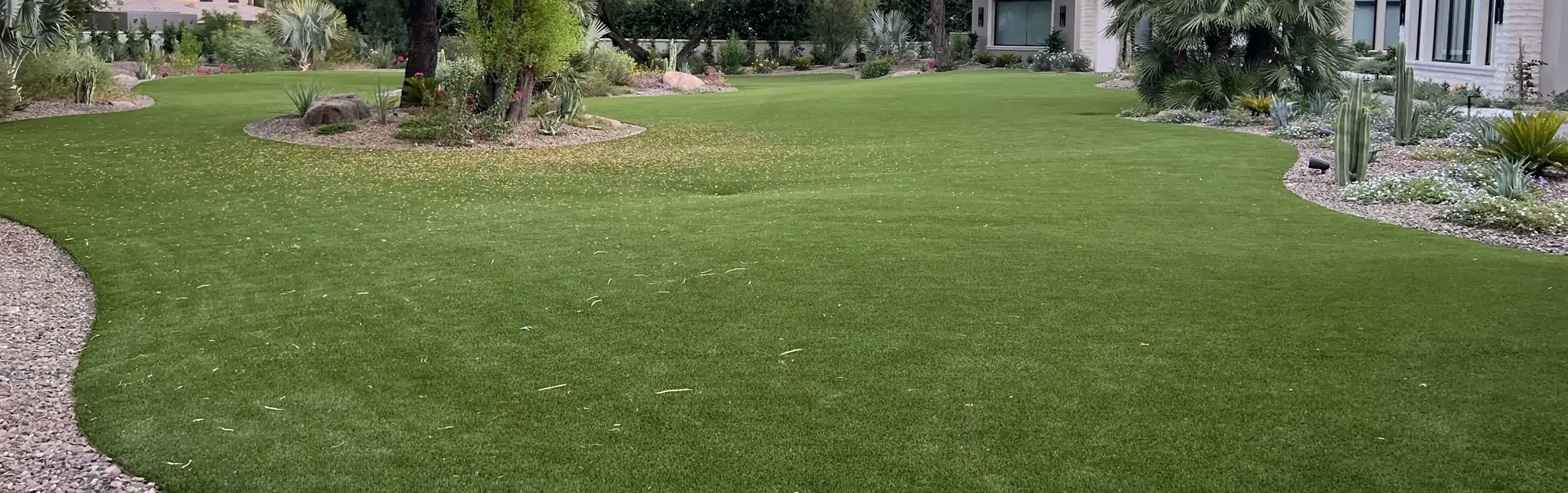
Main Introduction
Commercial Turf in the Northwest Houston Ranch-Prairie Corridor
Commercial artificial turf installation in the Cypress, Texas market serves a wider range of property types than the term "commercial" typically suggests. Yes, this includes retail strip centers, office park entrance zones, and multifamily amenity areas along US-290 and Highway 6. But it also includes boarding facilities along FM 362, equestrian training operations on Hockley acreage, agricultural supply businesses in the Waller corridor, and the commercial-adjacent equestrian facilities that make the northwest Harris County and Waller County zones distinct from any other commercial market in the greater Houston region.
Turf Installation of Cypress approaches commercial projects across this full range with one consistent discipline: scope is defined around what the surface actually needs to do, and installation planning starts with site conditions rather than a standard spec applied regardless of what the site presents. That means base preparation on a US-290 commercial landscape strip is designed around the compaction and drainage behavior of the specific site, not averaged from regional assumptions. And it means a commercial equestrian facility's wash rack surround and arena approach get material specifications that account for hoof load, moisture exposure, and cleaning demands — not the same system installed on a business park lawn.
What Defines the Commercial Project Scope
Commercial turf projects in the northwest Houston corridor differ from residential projects primarily in three ways: scale, intensity of use, and the multiple-stakeholder coordination that commercial properties require. Property managers, facility teams, tenants, and in some cases municipal code compliance reviews all factor into a commercial installation in ways that a residential backyard project does not involve.
For commercial landscape and entrance zone projects, scale means cut planning and seam placement that produces clean results across larger continuous areas. Traffic intensity means material specification that accounts for commercial foot traffic counts rather than household-scale use. And stakeholder coordination means scheduling installation windows around tenant occupancy, operating hours, parking access, and lease-compliance timelines.
For commercial equestrian facilities — boarding operations, training centers, and ranch-commercial operations along FM 2920, FM 362, and the Cypress Top corridor — scope definition goes further. Application zones are reviewed individually: the arena approach, the trailer staging area, the cross-tie section, the wash rack surround. Each zone has different traffic type, moisture exposure, and performance requirements. Turf Installation of Cypress documents specification for each zone separately rather than applying a single commercial-grade system across all areas.
Base Preparation for Commercial Sites in Northwest Houston
The coastal prairie clay that underlies most northwest Harris County and Waller County commercial properties is not a friendly installation environment for synthetic turf if base preparation is treated as optional or standardized. Commercial sites along US-290, Highway 6, and FM 529 have typically been graded and compacted for building construction — but that construction-grade compaction is not the same as a turf-installation base. Disturbed clay fill areas can have inconsistent density, unpredictable drainage behavior, and surface grade that was designed for visual appearance rather than water movement.
For northwest Houston commercial sites, Turf Installation of Cypress evaluates existing base conditions during site assessment rather than assuming construction-grade compaction is adequate for turf performance. Where additional drainage aggregate or grading adjustments are needed, those steps are identified in scope documentation before material is ordered. Commercial projects that skip adequate base evaluation often produce surfaces that settle unevenly or pond water within the first seasonal rain cycle — problems that require pulling turf to fix and that cost far more than a thorough front-end assessment.
Commercial equestrian facility sites add moisture management complexity to base preparation. Wash rack drainage, stall runoff, and weather-driven moisture from covered areas all contribute to base saturation patterns that a residential drainage specification cannot adequately address. For commercial equestrian applications, base work includes drainage routing designed for the actual moisture loads the site will experience, not a standard perforated backing assumption.
Material Selection by Commercial Application Type
Not all commercial turf applications use the same material. The right turf system for a retail strip center entrance zone — pile height, backing weight, infill type — is different from the system appropriate for a commercial equestrian facility wash rack. Both are commercial applications, but the surface demands are completely different.
For commercial landscape and entrance applications, turf selection focuses on consistent appearance under foot traffic, UV stability through the extreme Houston summer heat cycle, and drainage performance that prevents surface pooling in heavy rain events. Pile height and blade architecture are selected to match the aesthetic requirements of the specific commercial property context — an office park entrance zone needs a different aesthetic profile than a gas station landscape strip along US-290.
For commercial equestrian and agricultural applications, the selection priorities shift toward load capacity, moisture management, and long-term durability under concentrated use. Shorter pile heights provide more stable footing for horses and equipment. Heavier backing resists deformation under hoof and tire load. Infill selection accounts for the cleaning demands of high-use livestock zones where routine flushing and periodic deep cleaning are part of maintenance expectations.
Scheduling Around Commercial Operations
Commercial projects in the northwest Houston corridor have scheduling constraints that residential projects do not. Retail and office properties have operating hours that define when access is available for installation equipment and material delivery. Equestrian facilities have daily livestock management schedules — morning feeding, turnout, training sessions — that define which zones are accessible when. Construction-phase commercial properties may have coordination requirements with general contractors or other trade sequencing.
Turf Installation of Cypress reviews scheduling constraints for every commercial project during the initial planning phase so installation sequencing does not create conflicts with operations. For active commercial properties, work zones are defined to maintain customer and employee access in non-work areas throughout installation. For equestrian facilities, crew access windows are confirmed around animal management routines before installation day.
Commercial Project Delivery Standards
Commercial projects receive the same scope documentation, site assessment discipline, and final walkthrough standards as residential projects — but at the scale and stakeholder coordination that commercial settings require. Scope documentation for commercial projects includes zone-by-zone material specification, base preparation requirements, access coordination plan, sequencing schedule, and handoff care guidance by application type. Property managers receive documentation they can reference for ongoing maintenance and potential tenant handoffs.
Work zone cleanliness and access management are maintained throughout commercial installations. Public-facing commercial properties have appearance standards that require daily cleanup and organized material staging so the property does not present a disrupted image to customers or tenants during active installation. Turf Installation of Cypress builds these standards into the installation plan for commercial properties, not as exceptions to standard process.
Service Area for Commercial Installation
Commercial artificial turf installation is available throughout Cypress, Jersey Village, Tomball, Spring, Hockley, Waller, Katy, Brookshire, Pinehurst, Magnolia, Hempstead, Prairie View, and Northwest Houston. Commercial projects in the Hockley and Waller equestrian corridor and the US-290 commercial zone are coordinated with local routing and crew scheduling so each project receives consistent service delivery regardless of location within the service area.
What Is Included
- Application-specific material selection: landscape, equestrian, athletic, commercial entry
- Base evaluation rather than standard-specification assumption
- Drainage routing for commercial moisture load conditions
- Multi-stakeholder scheduling coordination
- Work zone management for occupied commercial properties
- Zone documentation for property management reference
- Equestrian facility and ranch-commercial application expertise
- Coverage across northwest Houston commercial and ranch corridor
Process Steps
- 1Commercial site assessment: drainage, base condition, access, stakeholder constraints
- 2Zone-by-zone scope definition with application-specific material selection
- 3Scheduling coordination around operating hours, tenant access, and livestock management
- 4Base preparation: compaction evaluation, drainage aggregate, grading adjustments
- 5Material staging and access route setup for commercial site conditions
- 6Turf placement with seam and cut planning for large-area commercial scope
- 7Edge finishing, infill placement, and grooming by zone specification
- 8Final walkthrough with zone-specific care guidance and documentation
Use Cases and Applications
- Commercial entrance zones and building approach landscaping
- Office park and retail center green area maintenance replacement
- Equestrian facility wash rack surrounds and arena approach areas
- Boarding facility high-traffic ground zones
- Commercial trailer staging and equipment yard perimeter turf
- Multifamily amenity area and common space surfaces
- Agricultural business entrance and commercial ranch approach
- US-290 and Highway 6 commercial corridor landscape zones
Why Property Owners Choose This Service
- Zone-by-zone material specification for mixed commercial application sites
- Coastal prairie clay base preparation calibrated to commercial site conditions
- Equestrian facility scope: arena approaches, wash racks, trailer staging areas
- Operating-hours scheduling for active retail, office, and facility properties
- Commercial landscape, entrance zone, and amenity area installation
- Drainage routing designed for commercial moisture loads, not residential assumptions
- Scope documentation suitable for property management and tenant handoff
- Coverage across the US-290 corridor, FM ranch zone, and Waller County commercial market
Pricing Factors
- Project size and access conditions.
- Base preparation and drainage requirements.
- Material specifications selected for expected usage.
- Edge details and transition complexity.
- Scheduling constraints and phased execution needs.
Service Area Coverage
Related Services
Frequently Asked Questions
How do you handle base preparation on commercial sites with construction-grade compaction?
Construction-grade compaction is not the same as turf-installation base. We evaluate existing base conditions during site assessment and identify any additional drainage aggregate or grading adjustments needed before material is ordered.
Do you serve equestrian facility commercial applications in Cypress and Hockley?
Yes. Commercial equestrian facilities along FM 362, FM 2920, and the Cypress Top corridor are served with application-specific material selection for each zone: wash racks, arena approaches, cross-tie areas, and trailer staging all receive separate specification review.
How is scheduling coordinated around commercial operating hours?
Installation windows, material delivery, and work zone access are all confirmed around the property's operating schedule before work begins so tenant and customer access is not disrupted during active installation.
Can commercial projects be phased across multiple zones or budget cycles?
Yes. Multi-zone commercial projects can be sequenced across phases with consistent finish standards maintained in completed areas while subsequent phases are planned.
What documentation is provided for commercial property management handoff?
Scope documentation includes zone-by-zone material specification, base preparation summary, drainage routing notes, and care guidance by application type. Property managers receive reference documentation suitable for maintenance coordination and future tenant handoff.
How is drainage handled on commercial sites with poor slope or blocking structures?
Drainage routing is mapped to defined outflows before base placement begins. Sites with poor slope or drainage constraints receive engineered drainage solutions appropriate to the site conditions — not a perforated backing assumption on clay that retains moisture.