
Main Introduction
Athletic Turf in the Northwest Houston Sports Market
Cypress, Texas and the surrounding northwest Houston corridor have a concentrated youth and adult sports culture — Cy-Fair ISD athletic programs, club soccer organizations, private school athletics, and the growing number of residential properties with dedicated backyard practice areas for families with kids in competitive sports. The demand for athletic-specification synthetic turf across this market ranges from small residential practice zones to institutional field conversions, and the performance requirements differ significantly from ornamental or pet-use turf applications.
Turf Installation of Cypress handles athletic turf projects with the same site-specific planning discipline applied to every installation, but with material specification and base preparation calibrated for athletic performance rather than aesthetic quality or pet drainage. An athletic turf surface needs to drain quickly during the intense Houston summer storm events, manage heat retention for afternoon practice sessions, and hold its structural integrity under the concentrated impact of cleated footwear through a full season of daily use.
The northwest Houston clay-soil environment creates specific challenges for athletic turf installations that sandy or prepared sub-base sites do not encounter. Clay subgrades require deeper base aggregate, drainage routing to defined exits, and base compaction standards that produce consistent density across the full playing surface — because athletic turf performance is noticeably degraded by inconsistent base firmness in ways that decorative turf installations are not.
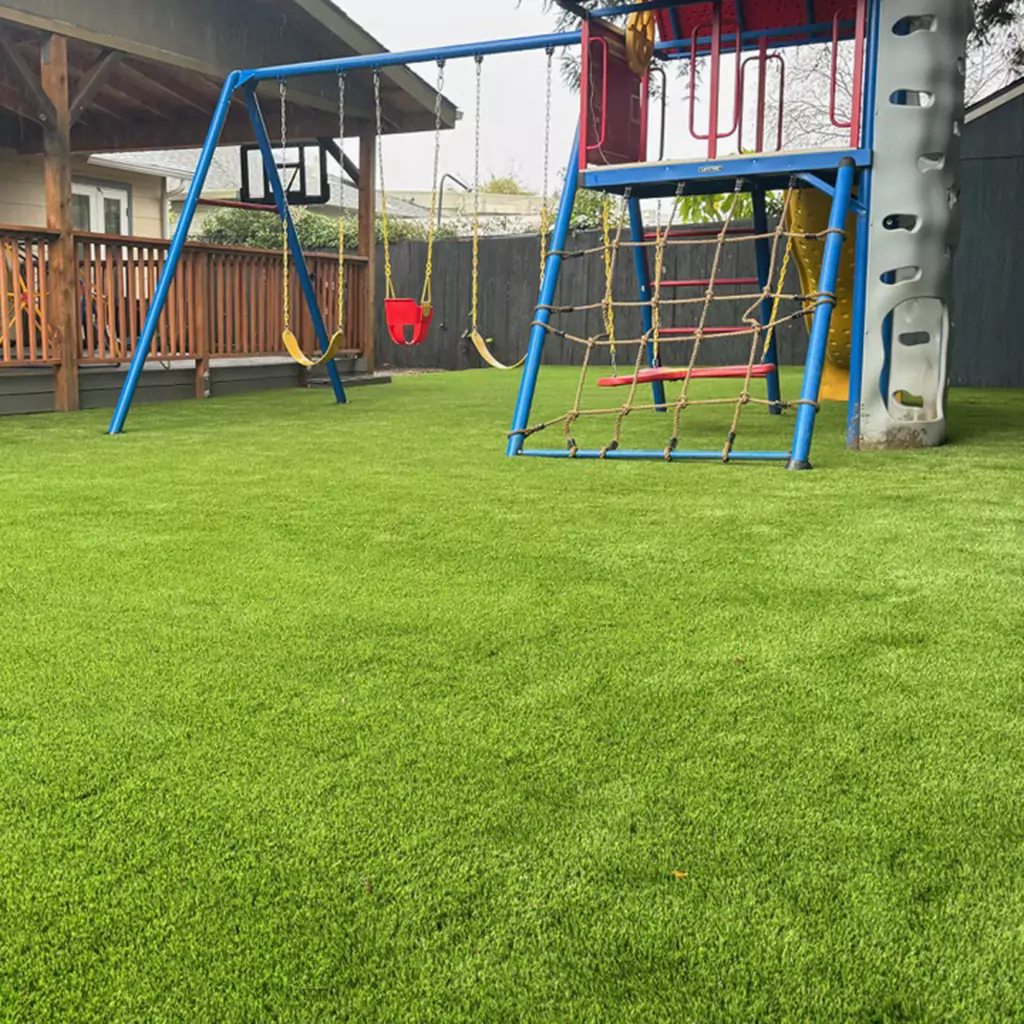
Residential Athletic Practice Areas
The Cypress and northwest Houston residential estate market — particularly in Cinco Ranch premium sections, Stable Gate larger lots, and the acreage properties of Hockley and northwest Waller County — includes families with children in competitive club sports who want dedicated backyard practice facilities. Baseball batting practice areas, soccer kick walls, multi-sport turf zones for training and conditioning, and dedicated lacrosse or field hockey practice surfaces are all requested in the Cy-Fair corridor residential market.
For residential athletic turf projects, Turf Installation of Cypress reviews the primary sport, user age and weight range, cleat type, and expected use frequency before specifying material. Soccer cleats interact differently with turf pile and infill than baseball cleats or multi-sport shoes. A surface optimized for one use may perform poorly for another if specification is not matched to actual intended use.
Base compaction for residential athletic areas uses firmer standards than residential lawn turf. Shock absorption characteristics depend on both the turf system and the infill depth, and infill selection for athletic applications differs from pet or ornamental use. Turf Installation of Cypress documents base compaction target, infill type, and infill depth in scope documentation before material is ordered so the property owner understands what the system is designed to deliver.
School and Institutional Athletic Fields
School athletic field conversions in the Cypress-Fairbanks and surrounding school district area represent larger-scale institutional projects with specific performance, access, and scheduling requirements. Synthetic field installations for school campuses require line marking coordination, bleacher and goal post interface planning, and installation scheduling around academic calendar and athletic program windows.
For institutional athletic field projects, Turf Installation of Cypress reviews field sport requirements, line marking specifications, and any existing drain infrastructure that the field installation must connect to or work around. School field installations typically need multiple sporting-line configurations — typically soccer/football overlay, or baseball foul line coordination if applicable. Line marking options for synthetic turf range from painted lines to in-fill color marking, each with different performance and maintenance characteristics.
Access and scheduling for school and institutional fields require planning around campus operating calendars. Field installations during summer breaks allow full-field access without disrupting athletic programming. Spring or fall installations must be phased around active athletic seasons. Turf Installation of Cypress coordinates scheduling for institutional projects from the initial planning phase.
Club Sport Facility Applications
Club sport organizations in the Cypress corridor — soccer academies, lacrosse clubs, and similar private athletic programs — occasionally need dedicated practice surface installations at leased or owned facility locations. These applications sit between residential and full-institutional scale, typically covering one to two acres of practice field surface. Club facility projects require commercial-grade turf systems, field line specifications matching the sport, and drainage planning for outdoor field surfaces exposed to northwest Houston storm events.
For club sport facility projects, base work requires the same drainage-priority planning as commercial installations: existing drainage infrastructure review, drainage routing to defined exits, and base compaction consistent across the full field area. Field seam placement is planned to avoid seam locations in high-traffic zones such as center circles, penalty areas, and frequently used player entry points.
Heat Management for Northwest Houston Athletic Turf
Athletic turf in northwest Houston accumulates heat differently from natural grass. In peak summer conditions — late June through August — synthetic turf surface temperatures can reach uncomfortable levels for afternoon practices and games. The northwest Houston sports calendar runs year-round, including summer training seasons, so heat management is a practical consideration for athletic turf in this climate.
Infill selection has a meaningful effect on athletic turf surface temperature. Crumb rubber infill retains heat more than coated sand or newer cooling infill options. For residential practice areas and institutional fields used in summer heat, Turf Installation of Cypress reviews heat management characteristics of available infill options as part of material selection rather than treating all infills as equivalent. Cooling technology infills are available for applications where summer afternoon use intensity makes heat reduction a priority.
Athletic Turf Service Coverage
Athletic field artificial turf installation is available throughout Cypress, Jersey Village, Tomball, Spring, Hockley, Waller, Katy, Brookshire, Pinehurst, Magnolia, Hempstead, Prairie View, and Northwest Houston. Projects range from residential practice areas to institutional field conversions.
What Is Included
- Athletic-specification base compaction distinct from ornamental turf standards
- Clay-site drainage routing to defined exits before base material placement
- Sport-matched material selection by cleat type and use intensity
- Heat management infill options for summer practice schedule properties
- School and club field line marking coordination
- Institutional project academic calendar scheduling
- Residential estate practice area installation on Cypress and Katy large lots
- Documented scope before material ordering for institutional project records
Process Steps
- 1Field use review: sport, cleat type, user profile, and frequency of use
- 2Base drainage planning: clay subgrade routing to defined exits
- 3Scope documentation: base spec, infill selection, line marking, access coordination
- 4Base preparation: excavation, aggregate placement, compaction to athletic density standard
- 5Field layout and turf placement with seam location mapped away from high-traffic zones
- 6Line marking installation: painted or in-fill color by specification
- 7Infill distribution to specified depth for shock absorption and heat management
- 8Final performance review and care guidance for athletic surface maintenance
Use Cases and Applications
- Residential backyard soccer, baseball, and multi-sport practice areas
- Cy-Fair area private school athletic field conversions
- Club soccer and lacrosse facility practice surface installations
- Youth sports association field upgrades in Cypress and northwest Houston
- Hockley and Katy estate properties with dedicated sports practice zones
- Commercial sports training facility surface installations
- Multi-sport overlay field configurations for shared athletic facilities
- Warm-up and conditioning zones adjacent to primary athletic facilities
Why Property Owners Choose This Service
- Sport-specific material specification: cleated footwear interaction, pile height, infill type
- Base compaction calibrated for athletic performance consistency, not ornamental standards
- Drainage planning for heavy Houston summer storm events on clay-soil athletic sites
- Heat management infill options for northwest Houston summer practice schedules
- Line marking specification for school and club facility field projects
- Institutional project scheduling around academic calendar and athletic seasons
- Residential practice area scope for Cypress and northwest Houston estate properties
- Commercial-grade turf systems for club sport facility applications
Pricing Factors
- Project size and access conditions.
- Base preparation and drainage requirements.
- Material specifications selected for expected usage.
- Edge details and transition complexity.
- Scheduling constraints and phased execution needs.
Service Area Coverage
Related Services
Frequently Asked Questions
How does material selection differ for soccer cleats versus baseball cleats on residential practice turf?
Soccer cleats have smaller, more distributed studs than baseball or lacrosse cleats. Pile height and infill depth are specified relative to the primary cleat type to ensure appropriate traction and surface stability for the intended sport.
How is base compaction handled for athletic turf on northwest Houston clay soil?
Base aggregate depth is specified to achieve consistent compaction density across the full field area on clay subgrade. Clay-site installations require greater aggregate depth than sandy-base installations to produce the uniform firmness athletic performance requires.
Can you coordinate installation around a school or club sport season schedule?
Yes. Institutional and club project scheduling is coordinated from the planning phase to work around active athletic seasons. Summer installations allow full-field access without disrupting programming. In-season phasing is available where site access permits.
What heat management options are available for northwest Houston summer athletic turf?
Infill selection has a meaningful effect on summer surface temperature. Cooling technology infills are available that reduce surface temperature compared to standard crumb rubber. These are reviewed as part of material selection for properties with significant summer afternoon athletic use.
Can a residential Cypress estate property have a full soccer or baseball practice area installed?
Yes. Residential athletic practice areas are sized and specified for the available lot footprint and intended sport. Scope covers surface, base, infill, and any line or boundary markings needed for the practice application.
What maintenance does athletic turf require through a competitive sports season?
Routine care includes debris removal, periodic grooming to maintain infill distribution, and seam inspection after heavy-use events. High-traffic zones such as center circles and penalty areas receive more frequent infill replenishment than lower-traffic areas of the field.