
Main Introduction
Maintaining Synthetic Turf in Northwest Houston Conditions
Synthetic turf installations in Cypress and the northwest Houston corridor are exposed to conditions that accelerate wear in specific ways. The combination of clay soil movement, intense summer UV exposure, heavy rainfall events that test drainage performance, and the active outdoor use patterns of this region mean that even well-installed turf surfaces develop maintenance needs over time. Seams lift when clay base movement puts stress on attachment points. Edges detach where repeated hoof, foot, or equipment contact wears down anchoring. Infill migrates from high-traffic zones and concentrates in low spots, reducing surface performance where it matters most.
Turf Installation of Cypress provides maintenance and repair services for existing synthetic turf installations throughout the northwest Houston service area — both for surfaces originally installed by Turf Installation of Cypress and for existing installations placed by other contractors. The goal in each case is restoring surface performance and appearance to intended standards through targeted intervention, not wholesale replacement of material that can be returned to service.
For equestrian-adjacent properties in the Cypress and Hockley zones, turf maintenance takes on additional specificity. Barn-entry turf, paddock approach surfaces, and ornamental yard areas near horse infrastructure have concentrated wear patterns that differ from standard residential yard maintenance. Identifying where the wear is concentrated, understanding what is driving it, and addressing the underlying cause alongside the surface symptoms is the discipline that produces lasting repair results rather than temporary patches.
Common Maintenance and Repair Situations
The most frequent maintenance and repair situations Turf Installation of Cypress addresses across the northwest Houston market fall into a consistent set of categories:
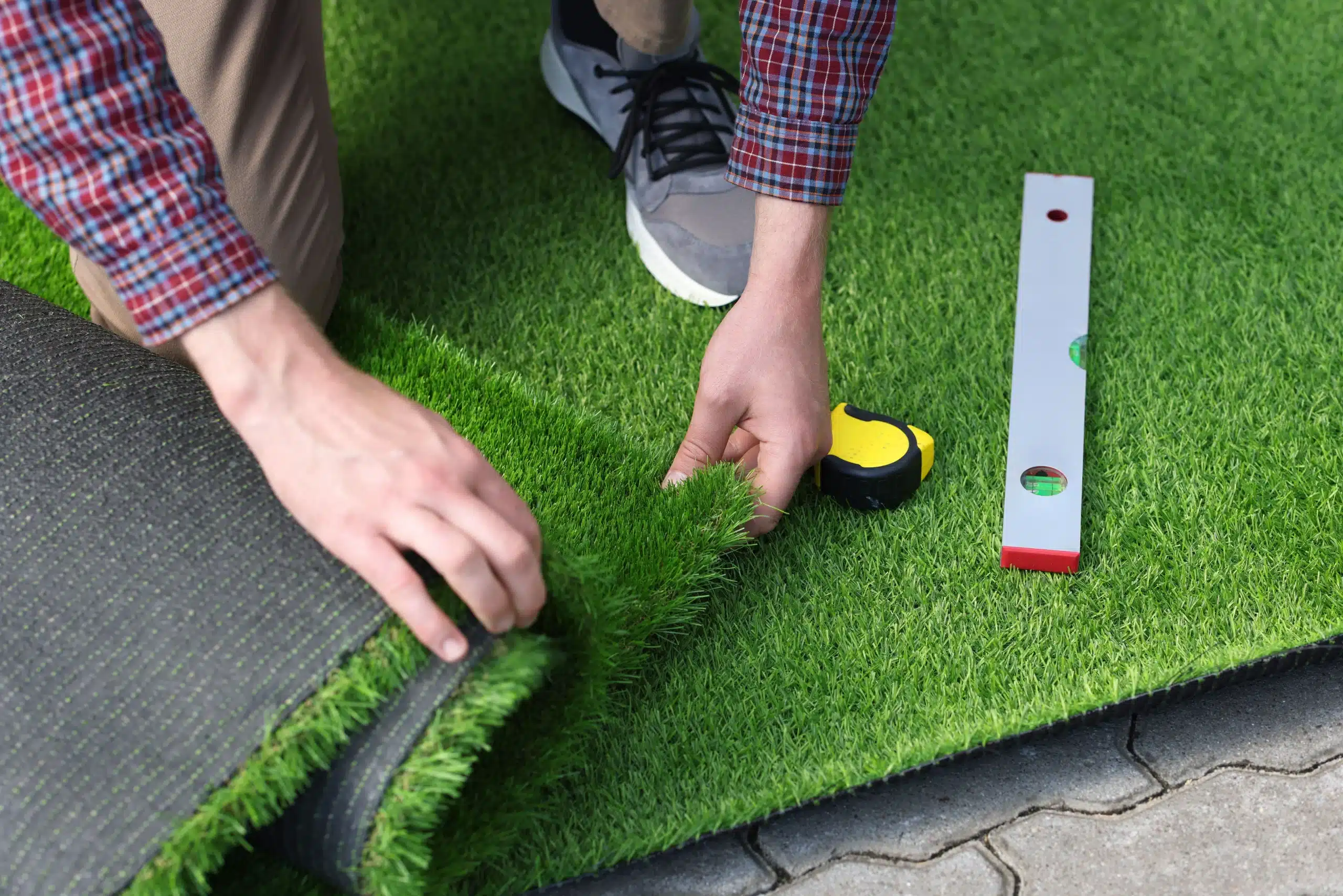
Seam separation is the most common structural problem in existing turf installations. Seams lift when adhesive bond fails at the junction between turf rolls, when base movement from clay expansion pushes edges apart, or when turf is cut too short at the seam and the overlap is insufficient to hold under foot traffic or temperature cycling. Reattachment requires pulling back the affected seam area, addressing any base irregularity that contributed to the failure, and re-bonding with appropriate adhesive under controlled conditions.
Edge lifting occurs when perimeter anchoring fails along concrete, pavers, fence bases, or landscape border edges. In equestrian properties, fence line edges and gate entry perimeters are the highest-risk locations because horse contact applies lateral pressure to edges that standard residential anchoring was not designed to handle. Repair at these edges requires heavier re-anchoring and in some cases additional edge treatment to distribute contact force away from the bond point.
Infill migration in high-traffic zones — particularly in residential backyards with dogs, athletic practice areas, and equestrian-adjacent surface approaches — produces a noticeable performance difference between the depleted zone and surrounding areas. Infill replenishment restores surface cushion, blade support, and drainage performance in these zones. This is addressed in more detail in the Artificial Turf Infill Replenishment service, but is often identified during maintenance assessments and addressed in the same service visit.
Drainage failure is a maintenance issue specific to northwest Houston's clay-soil environment. Over time, accumulated fine clay particles can clog perforations in turf backing and reduce drainage performance below the surface. A turf that drains correctly in the first year may develop surface ponding in subsequent years as clay migration reduces backing permeability. Diagnosis requires understanding whether the drainage issue is in the backing, the base aggregate, or the subgrade drainage routing — the repair approach differs significantly between these causes.
Assessment-First Approach to Turf Repair
Turf Installation of Cypress begins every maintenance and repair engagement with a site assessment that identifies what is happening, not just what is visible. A lifted seam may be caused by base movement, by seam bonding failure, or by incorrect installation of the seam during original installation. Diagnosing which cause is driving the failure determines the correct repair approach. Patching the surface symptom without addressing the underlying cause produces the same failure on a shorter timeline.
For drainage repair situations, assessment includes probing base depth and compaction at affected zones, reviewing existing drainage infrastructure, and identifying whether surface water is pooling due to a blocked backing, a failed drainage route, or a base-level issue that requires re-grading. These are different problems requiring different responses.
For equestrian-adjacent repair situations on Hockley and Cypress acreage properties, assessment includes reviewing how livestock contact is concentrated at the repair zone and whether the original material specification was appropriate for the actual equestrian use the surface received. If the original installation used residential-specification material in a zone with regular horse contact, repair may need to include material upgrade alongside reattachment.
Scheduled Maintenance for Long-Term Performance
Beyond reactive repair, scheduled maintenance visits extend the serviceable life of turf installations across the northwest Houston market. Annual or semi-annual maintenance visits typically include surface brushing to restore pile orientation in matted zones, infill depth measurement and replenishment where needed, seam and edge inspection, drainage performance verification after a rain event, and documentation of any developing issues that can be addressed before they become full repair situations.
For commercial properties and institutional athletic fields with higher use intensity, scheduled maintenance visits may be more frequent — quarterly for high-use facilities. For residential properties with moderate use, annual visits are typically sufficient to maintain surface quality.
Equestrian-adjacent residential and commercial properties benefit from post-storm inspection visits given the additional wear factors involved. Heavy rain events that push clay movement at barn entries and paddock approaches can accelerate edge and base problems that a post-storm inspection identifies early.
Repair and Maintenance Service Coverage
Artificial turf maintenance and repair is available throughout Cypress, Jersey Village, Tomball, Spring, Hockley, Waller, Katy, Brookshire, Pinehurst, Magnolia, Hempstead, Prairie View, and Northwest Houston.
What Is Included
- Diagnosis of seam failure cause: bonding, base movement, or original installation
- Equestrian-adjacent edge repair with appropriate anchoring for horse-contact zones
- Clay-soil drainage failure diagnosis and correction
- Infill depth measurement and zone-specific replenishment
- Post-storm inspection service for equestrian and clay-soil properties
- Scheduled maintenance programs for residential and commercial facilities
- Service available for installations by any original contractor
- Scope documentation for repair and maintenance records
Process Steps
- 1Site assessment: drainage performance, seam and edge condition, infill distribution, base integrity
- 2Root cause identification: what is driving the visible problem
- 3Repair scope documentation before work begins
- 4Seam or edge pull-back and base correction where needed
- 5Surface reattachment, re-anchoring, or patch installation
- 6Infill replenishment in depleted zones where identified
- 7Drainage verification after repair
- 8Final inspection and follow-on maintenance schedule recommendation
Use Cases and Applications
- Seam reattachment on residential Cypress and northwest Houston turf installations
- Edge lifting repair at fence lines, pavers, and concrete transitions
- Equestrian-adjacent edge and surface repair on Hockley and Waller ranch properties
- Drainage restoration on clay-soil northwest Houston turf installations
- Infill replenishment at dog zone, athletic, and high-traffic areas
- Annual and semi-annual scheduled maintenance for residential properties
- Quarterly maintenance visits for commercial and institutional athletic facilities
- Post-storm inspection and repair on ranch and equestrian-adjacent properties
Why Property Owners Choose This Service
- Assessment-first diagnosis before any repair work is specified
- Seam reattachment with base irregularity correction to address root cause
- Edge re-anchoring appropriate to equestrian-contact and standard residential applications
- Drainage failure diagnosis distinguishing backing clog, base issue, and subgrade routing failure
- Infill replenishment at depleted high-traffic zones
- Scheduled maintenance visits for residential, commercial, and equestrian properties
- Repair service for existing installations by any contractor across the northwest corridor
- Documentation of repair scope and handoff for property manager records
Pricing Factors
- Project size and access conditions.
- Base preparation and drainage requirements.
- Material specifications selected for expected usage.
- Edge details and transition complexity.
- Scheduling constraints and phased execution needs.
Service Area Coverage
Related Services
Frequently Asked Questions
Can you repair turf that was installed by a different contractor?
Yes. Turf Installation of Cypress provides maintenance and repair service for existing installations throughout the northwest Houston service area regardless of original installer. Assessment identifies what is needed and scope is documented before work begins.
How do you diagnose whether a drainage problem is in the backing or the base?
Assessment includes probing base depth, reviewing existing drainage routing, and testing drainage rate at affected zones. Backing clog, base aggregate failure, and subgrade routing problems have different indicators and require different repairs. Diagnosis before repair prevents addressing the wrong cause.
What causes seam separation on northwest Houston turf installations?
Seam separation is typically caused by adhesive bond failure, clay base movement putting stress on the seam junction, or insufficient turf overlap at the original seam. The repair approach differs by cause — patching only the surface without addressing base movement will fail again.
Can equestrian-adjacent edge damage at fence lines be repaired permanently?
Yes, but repair at horse-contact fence line edges typically requires heavier anchoring than the original installation. If original material was residential-specification in a horse-contact zone, material upgrade may be part of the repair scope.
How often does residential turf need maintenance visits?
Most residential properties with moderate use benefit from annual maintenance visits that include surface brushing, infill depth check, seam and edge inspection, and drainage verification. Higher-use residential properties with multiple dogs or athletic applications may benefit from semi-annual visits.
How quickly can a maintenance visit be scheduled for an urgent repair issue?
Scheduling depends on current workload and service area routing. Contact Turf Installation of Cypress directly for urgent repair situations and we will confirm the earliest available window for your location in the northwest Houston corridor.